
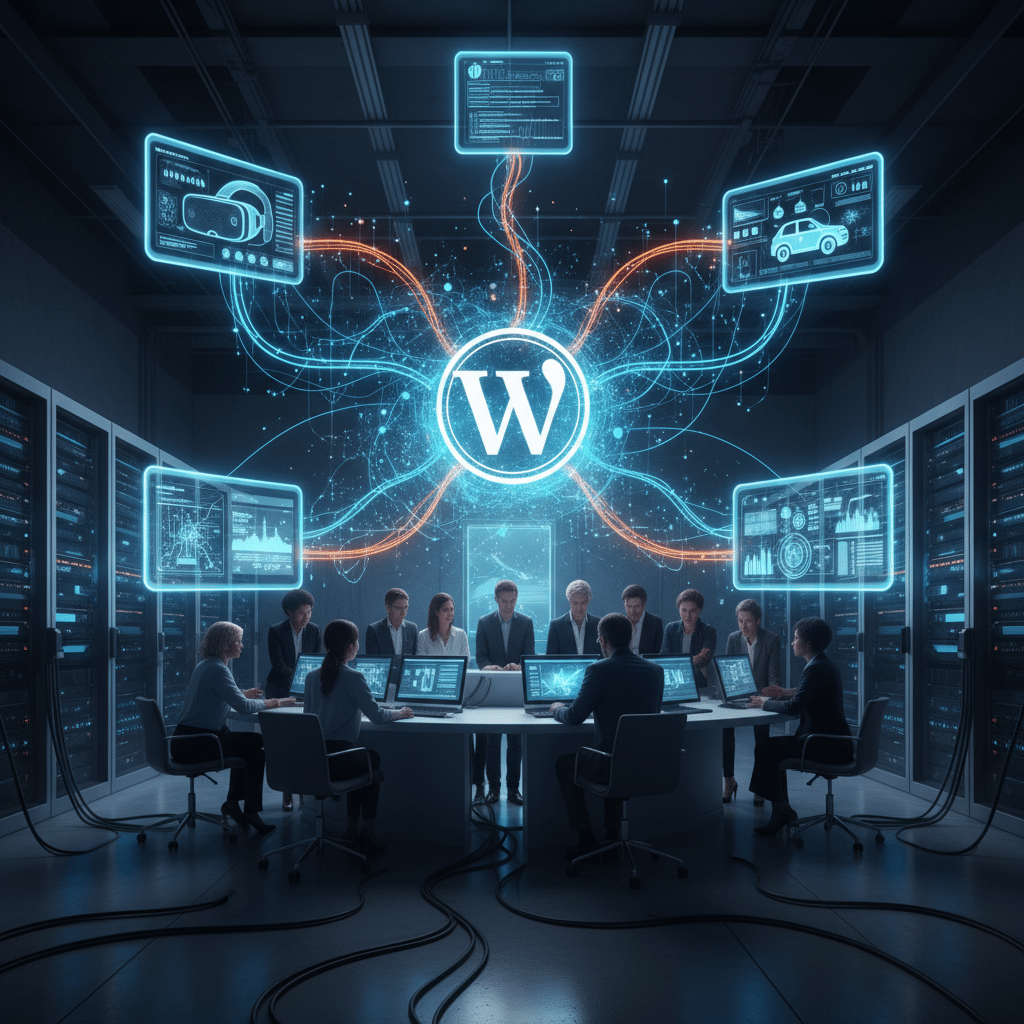
WordPress as an Operating System for the Agentic Web
WordPress is evolving beyond its traditional content management system role. Automattic’s latest vision positions WordPress as a foundational operating system for the emerging agentic web, where AI-powered agents autonomously interact with digital platforms.
The concept represents a significant shift in how we understand web infrastructure. Instead of serving only human users, WordPress will facilitate interactions between autonomous agents that perform tasks, make decisions, and execute transactions without human intervention.
Understanding the Agentic Web
The agentic web describes an internet where software agents operate independently on behalf of users. These agents can browse websites, compare services, make purchases, and manage digital tasks. They require structured, machine-readable interfaces to function effectively.
WordPress’s open-source architecture makes it uniquely positioned for this transition. The platform already powers over 40% of all websites, creating an extensive foundation. By adding agent-friendly capabilities, WordPress can become the primary interface between autonomous systems and web content.
This development differs from traditional APIs in several ways. APIs typically serve specific applications, while an operating system approach provides comprehensive agent interaction across all website functions. Additionally, the system will handle authentication, permissions, and resource management automatically.
Technical Infrastructure for Agent Interactions
WordPress will implement standardized protocols that agents can understand universally. These protocols enable agents to discover capabilities, negotiate services, and execute actions without custom integrations. The system must balance openness with security and performance.
The platform’s plugin architecture supports extensibility, allowing developers to add agent-specific functionality. Existing WordPress sites can gradually adopt these capabilities without complete rebuilds. This incremental approach reduces barriers to adoption across the ecosystem.
Furthermore, WordPress’s content modeling becomes crucial for agent comprehension. Structured data, semantic markup, and consistent taxonomies help agents interpret information accurately. The platform will likely expand its schema support to accommodate diverse agent needs.
Security and Trust Frameworks
Agent interactions introduce new security challenges that require robust solutions. WordPress must verify agent identities, validate permissions, and prevent malicious activities. Traditional authentication methods designed for humans don’t always apply to autonomous systems.
The platform will need reputation systems that track agent behavior over time. Sites can then make informed decisions about which agents to trust. These systems will operate transparently, giving site owners control over their agent interaction policies.
Rate limiting and resource allocation become critical when handling numerous agent requests. WordPress must prevent system overload while maintaining responsive service for legitimate agents. Dynamic scaling and intelligent request prioritization will play essential roles.
Business Models and Economic Implications
The agentic web creates new monetization opportunities for WordPress site owners. Agents may pay micropayments for content access, API calls, or computational resources. WordPress will need integrated payment systems that handle high transaction volumes efficiently.
Content creators gain new distribution channels through agent-mediated discovery. Agents searching on behalf of users will evaluate content quality, relevance, and trustworthiness. This shift may change SEO strategies significantly, focusing on agent optimization rather than traditional search engines.
The business model extends beyond individual sites to the broader WordPress ecosystem. Plugin developers can create agent-specific tools, themes can optimize for agent rendering, and hosting providers can offer agent-optimized infrastructure. These developments represent substantial economic opportunities.
User Experience Transformation
Human users will interact with WordPress sites differently when agents handle routine tasks. The interface may shift toward high-level intent specification rather than detailed manual operations. Users tell their agents what they want accomplished, and agents handle the implementation details.
However, WordPress must maintain excellent human interfaces alongside agent capabilities. Many users will continue direct interaction for creative work, content creation, and administrative tasks. The platform must serve both audiences without compromising either experience.
Transparency becomes essential in agent-mediated interactions. Users need to understand what their agents are doing and maintain control over important decisions. WordPress’s interface will likely include agent activity monitoring and approval workflows for significant actions.
Implementation Timeline and Adoption
Automattic hasn’t specified exact timelines for these capabilities. Nevertheless, the vision suggests gradual implementation through WordPress core updates and plugin ecosystem development. Early adopters will experiment with agent interactions before widespread standardization occurs.
The transition requires coordination across the WordPress community. Developers, hosting providers, and site owners must align on standards and best practices. This collaborative approach has historically driven WordPress’s success and will be crucial for the agentic web transition.
Education and documentation will support adoption as capabilities mature. Site owners need clear guidance on enabling agent interactions, setting policies, and optimizing their content. The WordPress community typically excels at creating accessible educational resources for new features.
Competitive Landscape and Alternatives
Other platforms are exploring similar agent-friendly architectures. WordPress’s market share provides advantages, but competitors may develop innovative approaches. The open-source nature of WordPress allows the community to incorporate successful ideas from other platforms.
Proprietary systems might offer tightly integrated agent experiences initially. However, open standards and interoperability favor WordPress’s approach long-term. Agents benefit from consistent interfaces across many sites rather than platform-specific integrations.
The competition will likely drive innovation across the web platform landscape. WordPress must balance stability with agility, maintaining backward compatibility while adding cutting-edge capabilities. This challenge has defined WordPress development for years.
Ethical and Social Considerations
The agentic web raises important questions about autonomy, privacy, and control. WordPress’s approach must consider these ethical dimensions carefully. Site owners deserve clear rights regarding agent access, while users need protections for their agent-mediated activities.
Content attribution and intellectual property become more complex when agents consume and synthesize information. WordPress will need mechanisms to preserve creator rights while enabling legitimate agent uses. These systems must balance openness with fair compensation.
Furthermore, accessibility remains paramount as agent interactions grow. The platform must ensure that users without sophisticated agents aren’t disadvantaged. WordPress’s commitment to democratizing publishing extends to the agentic web era.
Future Implications for Web Development
WordPress’s evolution toward an operating system model will influence web development practices broadly. Developers will increasingly design with both human and agent users in mind. This dual-audience approach requires new skills and methodologies.
The role of visual design may shift as agents prioritize functional data over aesthetic presentation. However, human users still value attractive interfaces, so developers must optimize for both. This balance will define successful WordPress implementations in the agentic web.
Testing strategies will expand to include agent interaction scenarios. Developers need to verify that agents can successfully accomplish tasks on their sites. Automated testing frameworks will evolve to simulate various agent behaviors and capabilities.
The vision of WordPress as an operating system for the agentic web represents ambitious thinking about the platform’s future. While implementation details remain unclear, the direction signals WordPress’s intent to remain relevant as the web evolves. This transformation could redefine content management systems for the next decade.
Original Source: automattic.com
Sources
- WordPress: The Operating System of the Agentic Web — automattic.com